Vietnam International Financial Center: New opportunities for Chinese enterprises in Asia’s new development phase
At pivotal moments in economic history, the greatest opportunities often emerge when a new growth structure begins to take shape. Vietnam today stands at precisely such a turning point. As Vietnam–China cooperation in trade, investment, and economic development continues to deepen and expand, Vietnam is entering a new stage of development with the ambition of advancing to a higher position as an important regional hub for capital, technology, and knowledge flows.
The establishment of the Vietnam International Financial Center (VIFC) is a strategic step toward realizing that vision, while also opening up new opportunities for cooperation for Chinese financial institutions, technology enterprises, and investors. VIFC is structured under a “one center, two locations” model, with sites in Ho Chi Minh City, officially launched on February 11, 2026, and Da Nang, officially launched on January 9, 2026. This is not merely a matter of geographic arrangement, nor simply the creation of a new financial platform. It is also a nationally significant institutional design aimed at maximizing the complementary strengths of two dynamic urban centers in southern and central Vietnam, thereby further enhancing the country’s ability to attract international capital, advanced financial technology, and high-quality talent.
Against the backdrop of rapidly restructuring global capital flows, intensifying geoeconomic competition, and the continued shift of growth momentum toward the Asia-Pacific region, VIFC is positioned as a new platform to help Vietnam integrate more deeply into international financial networks. At the same time, it creates more favorable conditions for Chinese enterprises to expand their presence in Vietnam, increase investment, and pursue long-term cooperation.
After forty years of reform and renewal, Vietnam’s economy has undergone a remarkable transformation, evolving from a developing country primarily reliant on primary production into a major manufacturing and export center in Asia. However, to move beyond the “middle-income trap” and join the ranks of high-income economies, Vietnam needs to build a deeper, more open, and more internationally aligned financial system capable of channeling capital, technology, and high-quality human resources more effectively. In this context, the Vietnam International Financial Center is being strongly advanced under direction at the highest levels. VIFC is therefore seen as a major institutional breakthrough, serving not only Vietnam’s long-term development goals but also creating new opportunities for Chinese businesses and investors to participate early in the formation of a new financial architecture in Southeast Asia.
1. VIFC and Vietnam’s Key Transition in a New Development Phase
The establishment of the Vietnam International Financial Center is not merely of economic significance; it is closely linked to Vietnam’s broader transition into a new stage of development. Over the past four decades, thanks to its strategy of openness and deep integration into the international economic system, Vietnam has achieved remarkable progress and has become one of the world’s most dynamic manufacturing and export hubs. Yet if Vietnam aims to join the ranks of high-income nations, its economy can no longer rely mainly on labor and manufacturing advantages. It must move toward a development model built on knowledge, innovation capacity, and efficient capital allocation.
In this context, the development of the Vietnam International Financial Center is regarded as a strategic solution for completing a modern economic structure. In the previous stage, Vietnam mainly promoted industrial and infrastructure development through attracting investment capital. In its new development phase, however, Vietnam is gradually moving toward a more proactive role, becoming an important connection point, allocation platform, and driving force for regional capital flows. This not only reflects Vietnam’s shift from being primarily a recipient of capital to becoming more deeply involved in coordinating international capital flows, but also creates broader room for Chinese enterprises and investors to engage in cross-border investment, expand financial operations, and strengthen connectivity with both the Vietnamese and ASEAN markets.
In the long term, VIFC will also contribute to the formation of a new economic ecosystem in which finance, technology, and innovation are more closely integrated. When global financial institutions, investment funds, technology companies, and research centers converge and interact, innovative ideas can be transformed more rapidly into high-value products, services, and business models. At the same time, this creates a suitable platform for Chinese enterprises with strengths in areas such as financial technology, artificial intelligence, data centers, blockchain, green finance, and digital financial services to launch cooperation in Vietnam, test new models, and further expand their market presence.
The development history of international financial centers shows that major investment value often begins to emerge in the early stages. Singapore, Hong Kong, and Dubai all illustrate a common pattern: institutions that enter early often gain long-term advantages in market position, relationship networks, and the ability to grow alongside the maturation of the institutional framework. Vietnam today stands before a similar historic opportunity. With a population of nearly 100 million, a rapidly expanding middle class, fast urbanization, and an extensive network of free trade agreements, Vietnam has become deeply integrated into the global trading system. Sustained high GDP growth over many years, a stable socio-political environment, and a strongly promoted national digital transformation strategy have together laid a solid foundation for building a new-generation financial center.
For international investors, participating in VIFC is not simply about entering a new market. It is also about joining at the starting point of a long-term growth cycle. At a time when the institutional framework, infrastructure, and financial ecosystem are still being rapidly developed and shaped, early movers will have the opportunity to secure strategic advantages in positioning, partnerships, and participation in setting future market standards.
Vietnam’s senior leadership has repeatedly emphasized the direction of building a financial center that is “smart, digital, and green,” rather than following the path of direct, homogeneous competition with traditional financial centers. Instead, Vietnam seeks to build on its own advantages and pursue a distinct development path. This approach reflects both confidence and pragmatism: rather than simply copying the existing models of Singapore or Hong Kong, Vietnam is integrating elements such as digital technology, green finance, financial technology, artificial intelligence, and the data economy into its development architecture from the outset. This is the path of a new-generation financial center: more flexible, more open, and more responsive to global changes. Compared with many traditional models, one of VIFC’s most distinctive features is its “two-location” structure operating under a unified institutional framework.
In Ho Chi Minh City, the development of international capital market functions will be prioritized. As Vietnam’s economic engine, Ho Chi Minh City brings together a dynamic business community, an increasingly mature startup ecosystem, and a broad international connectivity network. The Thu Thiem New Urban Area is being planned as a new fintech core, creating space for investment banks, private equity funds, venture capital funds, insurtech firms, and international bond issuance institutions. For Chinese banks, securities firms, investment funds, asset management companies, insurance enterprises, and professional financial service providers, this will be a priority destination for expanding their presence in Vietnam, participating in cross-border capital transactions, and strengthening linkages with the ASEAN market.
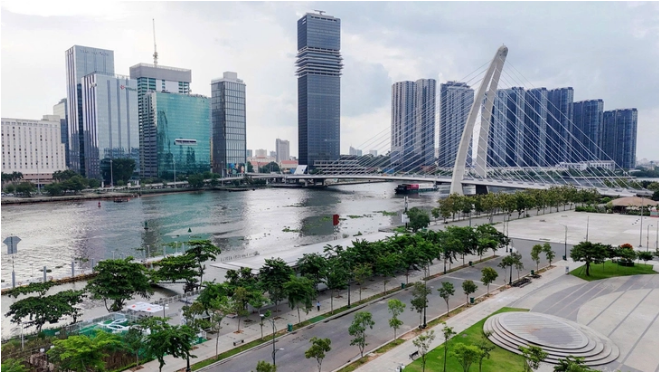 Ho Chi Minh City IFC to be established in District 1’s CBD and Thu Thiem Area with total area is 668 ha
Meanwhile, Da Nang is positioned as a center for green finance and innovation. This dynamic coastal city offers modern urban planning, steadily improving digital infrastructure, and a high quality of life, all of which are important conditions for attracting international experts and fintech research institutions. Da Nang is expected to become a space for piloting fintech, blockchain, artificial intelligence in finance, and regional data center initiatives. For Chinese enterprises operating in areas such as financial technology, data, artificial intelligence, green technology, sustainable investment, and digital infrastructure, this provides an appropriate platform to begin with pilot projects, scale up new models, and capture emerging demand in the Vietnamese market at an early stage. These two locations are not designed to compete with each other, but rather to complement one another: one focuses on capital transactions and traditional financial institutions, while the other emphasizes innovation and sustainable finance. Together, they form a more flexible structure capable of adapting more quickly to changes in the global environment.
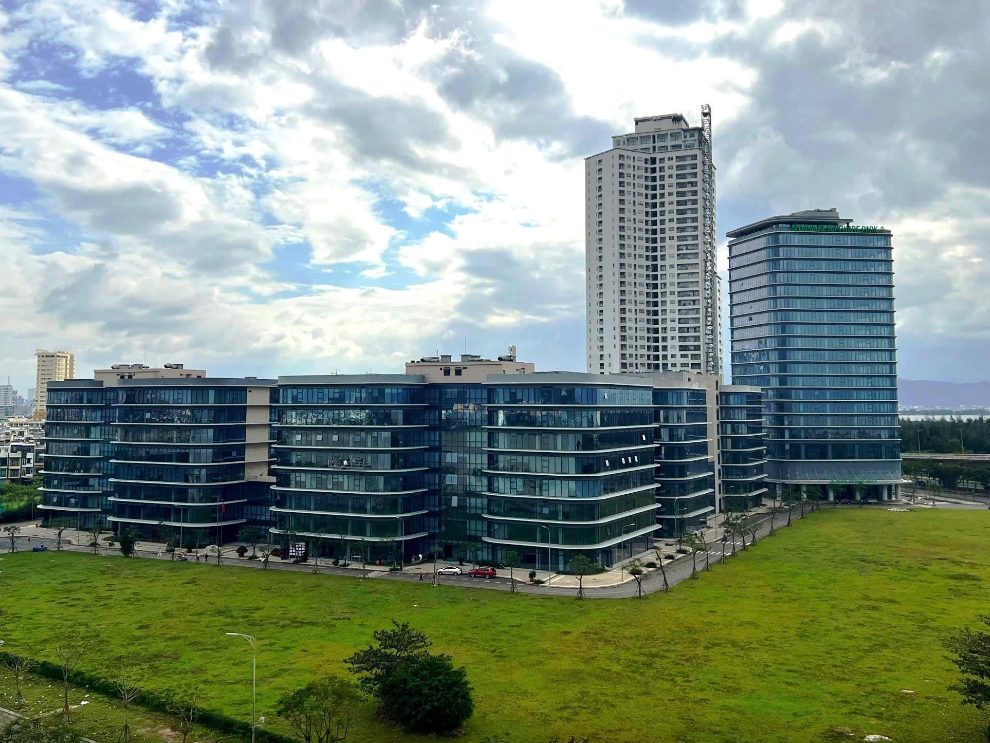 Da Nang IFC is to be established on the campus of Technology Park 2
Within a short time after its official launch, VIFC had already recorded nearly USD 10 billion in committed capital, including billions of dollars expected to be invested in an aviation finance center and data infrastructure. This figure not only reflects the scale of capital flows, but also demonstrates the level of market interest and confidence in Vietnam’s long-term development prospects. With strong regional economic growth, a young labor force, a market of nearly 100 million people, and a favorable geoeconomic position, Vietnam possesses many of the conditions needed to develop into an attractive emerging financial center. For Chinese enterprises and investors, this is also an important moment to pay early attention, make early strategic arrangements, and participate early in Southeast Asia’s emerging financial structure.
2. Investment Incentives: A Competitive Institutional Advantage in the Region
The success of an international financial center cannot be separated from a transparent, stable, and predictable institutional foundation. VIFC operates on the basis of a special legal framework established under Decree No. 323/2025/NĐ-CP and Decree No. 324/2025/NĐ-CP, forming an institutional space with a high degree of autonomy while still ensuring transparency and compliance with international standards. The application of International Financial Reporting Standards (IFRS), the establishment of Basel-based risk supervision mechanisms, and the introduction of regulatory sandbox mechanisms for digital assets, digital currencies, and cross-border payments all demonstrate Vietnam’s clear determination to align with global norms.
For Chinese enterprises and financial institutions, this is particularly important, as it creates more favorable conditions for expanding cross-border operations, deploying digital finance models, managing risk in line with international standards, and developing long-term investment plans in Vietnam. One of the key factors behind VIFC’s competitiveness is its highly attractive investment incentive framework. Under the current regime, priority sectors such as financial technology, green finance, artificial intelligence, semiconductors, and data centers may enjoy a corporate income tax rate of 10 percent for 30 years, together with corresponding tax exemptions and reductions. For projects outside the priority categories, a corporate income tax rate of 15 percent for 15 years remains highly competitive in the current regional investment environment.
However, tax incentives are only one part of the broader policy framework. More importantly, Vietnam is clearly signaling a long-term commitment to accompanying investors and building a stable, predictable investment environment. Especially noteworthy is Vietnam’s talent attraction policy, which has been designed with a long-term vision and is being implemented systematically. Personal income tax exemptions and reductions for experts, scientists, and senior managers in the early stages of projects not only provide direct financial incentives, but also reflect Vietnam’s recognition of the importance of high-quality human resources. The Golden Visa and Talent Visa programs, with validity periods of up to ten years, convenient procedures, and clear residency pathways, make Vietnam an attractive destination for international professionals seeking new development opportunities in Asia.
For Chinese enterprises, this is a notable institutional advantage, as it facilitates the long-term deployment of experts, managers, technical teams, and senior personnel to Vietnam, thereby directly supporting project implementation and business expansion at VIFC.
The development of VIFC is aimed not only at attracting capital, but also at building a complete financial ecosystem. Within this ecosystem, investment banks, hedge funds, venture capital funds, fintech companies, technology enterprises, data centers, and research institutions can coexist and reinforce one another. When capital is combined with technology and talent, value creation can grow exponentially. For Chinese enterprises active in areas such as financial technology, cross-border payments, data, artificial intelligence, green finance, and digital infrastructure, this creates an important space for cooperation, product testing, business model expansion, and stronger connections with the Vietnamese and ASEAN markets.
At the same time, VIFC will not only contribute to enhancing Vietnam’s economic standing, but, in the context of accelerating Asian capital flows, technological progress, and value chain restructuring, will also continue to expand the space for regional financial cooperation. An international financial center is not merely a place where capital transactions take place. It is also an important hub linking financial institutions, technology companies, investment funds, and global professional service networks. As multinational financial groups establish offices in Vietnam, activities such as international bond trading, project finance, and cross-border investment in Vietnam are expected to increase, thereby further strengthening Vietnam’s position while also creating more room for Chinese enterprises and investors to deepen their presence, strengthen ties with the Vietnamese market, and connect more effectively with the broader ASEAN economic space.
At the same time, the vision of VIFC goes beyond short-term growth or simply attracting capital. Its development model is built on the foundation of sustainability, with green finance, ESG investment, energy transition, and environmentally friendly technologies serving as key pillars. This is aligned both with the global trend of capital flows shifting rapidly toward sustainability and with Vietnam’s international commitments on net-zero emissions and low-carbon economic development. Integrating green finance into the overall framework from the design stage not only enhances VIFC’s long-term competitiveness, but also opens up notable opportunities for Chinese enterprises and investors in areas such as renewable energy, green finance, environmental technology, data, and sustainable infrastructure, enabling them to participate early, pilot new models, and expand cooperation in Vietnam.
For that reason, the success of VIFC should not be measured solely by registered capital or the number of financial institutions in operation, but more importantly by whether it can generate broad spillover effects across the wider economy. As the capital market deepens, businesses will gain more access to long-term funding channels at reasonable cost. As the financial system becomes more digitalized and transparent, transaction costs will continue to fall while the efficiency of resource allocation improves. As international experts come to work in Vietnam and share knowledge, the country’s endogenous development capacity will also be strengthened.
For Chinese enterprises, this means not only entering a fast-growing market, but also having the opportunity to participate in the formation of a new fintech ecosystem in which investment activities, financial services, cross-border payments, asset management, data applications, and innovation factors can be connected more effectively within an increasingly mature environment. VIFC is therefore not only an invitation to invest, but also an opportunity to help build a new regional financial structure. This process will support Vietnam’s gradual rise as an increasingly influential financial technology center in the region, while also opening a new platform for cooperation between Vietnam and international partners, including China.
For Chinese enterprises and investors, this is an opportunity to participate from the very beginning, not only to expand their business presence in Vietnam and strengthen ties with the ASEAN market, but also to promote the deployment of new financial and technological models, while taking part in shaping the new standards and ecosystem of VIFC. For experts and highly qualified talent, this is also a suitable environment for long-term work and development within a dynamic setting that is deeply integrated into the international system and still offers substantial room for growth.
Across Asia, financial centers such as Singapore, Hong Kong, Shanghai, and Dubai have each undergone decades of development and gradually formed their own distinct strengths. Singapore stands out for governance capacity and legal stability. Hong Kong plays an important role in connecting international capital with the Chinese market. Shanghai has the advantage of a vast domestic market. Dubai, meanwhile, is an influential financial center in the Middle East. As a latecomer, Vietnam’s advantage lies in its ability to build from the outset according to the model of a new-generation financial center, following a digital and green path while deeply integrating technologies such as artificial intelligence, big data, and blockchain. Competitive operating costs, a young workforce, and rapid growth together create Vietnam’s unique appeal.
VIFC can be positioned as the financial center of one of Southeast Asia’s fastest-growing economies, while also serving as an important bridge connecting ASEAN, Northeast Asia, and the Mekong subregion. Rather than competing head-on with traditional financial centers, VIFC aims to play a complementary role within the regional financial network, becoming an important capital transit hub for infrastructure, renewable energy, and technology projects across Southeast Asia.
Vietnam is not waiting for opportunities; it is actively creating them. As the implementation of VIFC moves forward, a major door has opened for investors, experts, and financial institutions that are ready to move together and help shape Asia’s new financial future.